What Is Silent Inflammation? Why It Matters After 40
 By
By
What exactly is silent inflammation?
Inflammation isn't always a bad thing.
Acute inflammation is part of the body's normal response to injury or infection. It's one of the ways your immune system helps protect and repair you.
But inflammation can also persist at a low level over time.
You may hear this described as chronic low-grade inflammation or, more conversationally, silent inflammation because it may occur without the obvious redness, swelling or pain we associate with an acute inflammatory response.
Why are people talking about it?
Interest in chronic low-grade inflammation has grown alongside research into healthy ageing and chronic disease.
It is important, however, not to turn “inflammation” into an explanation for every symptom.
Feeling tired, gaining weight, experiencing brain fog or having sore joints does not automatically mean you have chronic inflammation. These experiences can have many causes and persistent or concerning symptoms deserve appropriate medical assessment.
At Thrive Beyond 40, we prefer a different question:
What are the everyday foundations we can understand and support?
What influences inflammation?
Our health is interconnected.
Factors associated with the broader inflammatory picture can include:
-
dietary patterns
-
physical activity
-
smoking
-
sleep
-
body composition and metabolic health
-
stress
-
existing health conditions
-
ageing itself.
Rather than looking for a single “anti-inflammatory” product, it makes more sense to consider your overall lifestyle and health.
Where do omega-3 fatty acids fit?
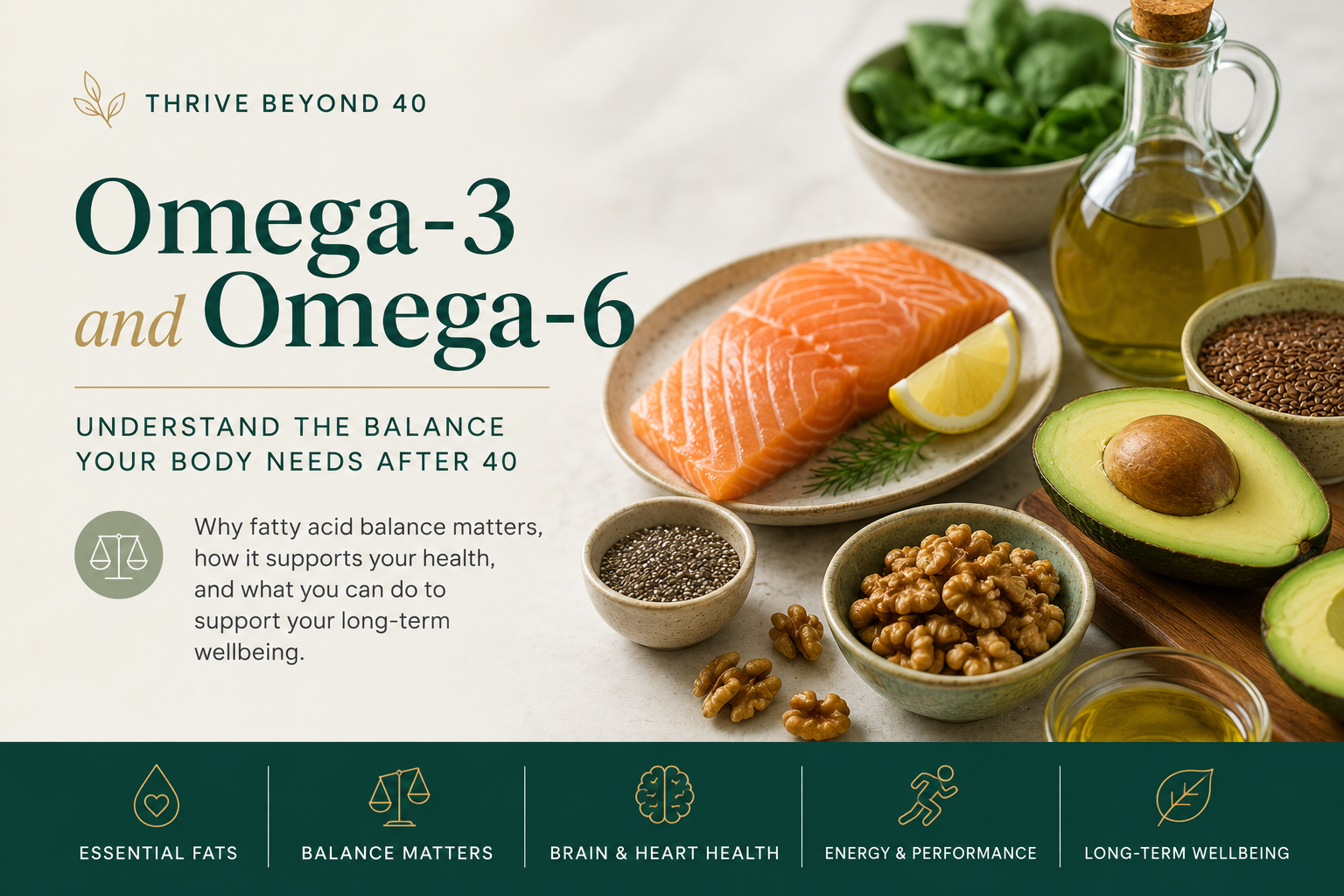
Omega-3 and omega-6 fatty acids are both important components of nutrition.
The conversation becomes more interesting when we look at what people are actually consuming and their individual fatty-acid status rather than assuming everyone's nutritional balance is the same.
That's one reason Thrive Beyond 40 takes a test, understand, support and retest approach to nutritional balance.
Our Balance Program uses an at-home fatty acid test to provide personalised insight into your omega-6 and omega-3 status before beginning targeted nutritional support.
Can you reduce “silent inflammation”?
There is no single switch.
A better approach is to build strong foundations:
Eat well. Prioritise a varied, minimally processed diet.
Move regularly. Physical activity is an important part of healthy ageing.
Sleep. Recovery matters.
Don't smoke.
Know your health markers. Keep up with appropriate medical checks.
Understand your nutrition. Where meaningful testing exists, personalised information can help move you beyond assumptions.
The Thrive perspective
Healthy ageing isn't about becoming obsessed with everything that could go wrong.
It's about becoming curious enough to understand what you can influence.
And your 40s can be an excellent time to start.
Your next step
Want to understand more about nutritional balance and personalised testing?
Or explore:
How We Help →